Patient: "Sophie" (name changed)
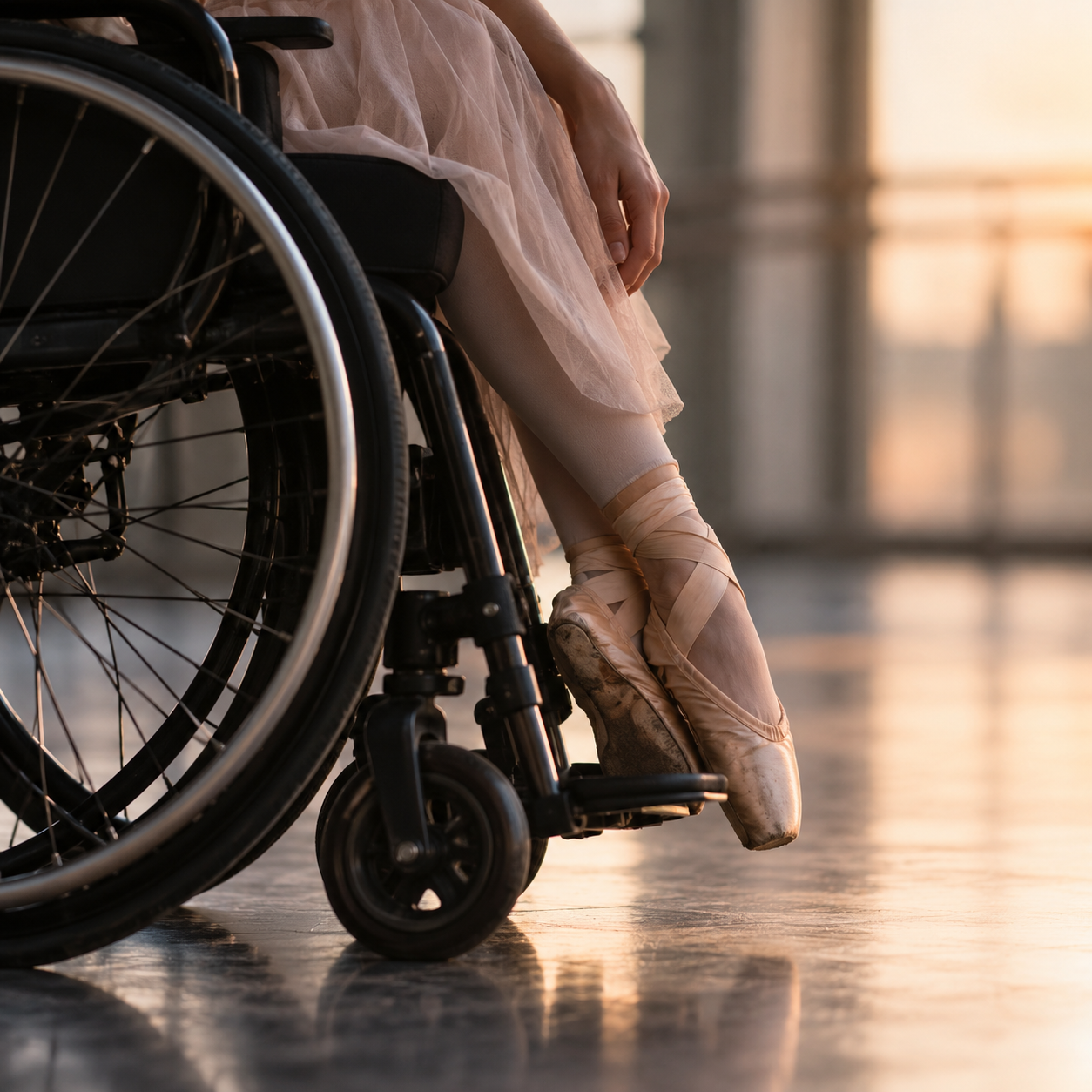
Age & bio: 28 year old former professional ballet dancer who left home at 16 to pursue her career. Also an avid rock climber and previously very active and independent.
🌿 Presenting Complaint
This month, I want to introduce you to Sophie, a 28-year-old woman with one of the more complex neurological presentations I've seen in practice.
Sophie left home at just 16 to pursue a career as a professional ballet dancer. So, as you can imagine, she spent much of her life developing an incredible level of strength, coordination, flexibility, and body awareness.
She was also an avid rock climber and loved being active.
A few years ago, however, her health took a pretty significant turn.
Sophie underwent emergency abdominal surgery to repair a hernia, which involved the placement of surgical mesh. She had difficulty healing afterward, and sometime following the surgery, she began experiencing progressive neurological symptoms.
Over the course of about a month, she developed significant weakness and sensory changes in her lower extremities, along with problems controlling her bowel and bladder.
Eventually, she became dependent on a wheelchair.
About a year later, she sustained a whiplash injury while travelling in her wheelchair, and around that same time, she developed severe gastroparesis.
Her digestive function deteriorated to the point that she needed a feeding tube for nutrition. At her lowest point, she weighed just 78 pounds.
She was also diagnosed with adrenal insufficiency during this period.
Despite seeing multiple neurologists and undergoing extensive investigations, there's still no clear explanation for what's causing her neurological symptoms. Autoimmune and genetic possibilities are being explored.
When Sophie first came to see me, she was dealing with cervical pain and restricted mobility, migraines, significant lumbar and sacral nerve pain, lower extremity weakness and spasticity, and ongoing bowel and bladder dysfunction.
Her goals were pretty straightforward, even if achieving them would be anything but simple.
She wanted to walk again, eat normally, regain her independence, and eventually get back to swimming and other physical activities.
🩺 Clinical Course
There was a lot going on with Sophie from an osteopathic perspective.
She had significant lateral compensatory patterns throughout her spine, restricted cervical mobility following her whiplash injury, and quite a bit of lumbar and sacral discomfort.
Her right side was more affected than her left, including her hand dexterity, and she had difficulty sitting unsupported because of reduced trunk control.
I was also particularly interested in her history of emergency hernia repair.
Given that her neurological symptoms began sometime after the surgery, I wondered whether there might be a broader systemic issue contributing to both her poor healing and neurological symptoms.
It certainly wasn't something I could determine through manual assessment, but it was an important piece of her history.
With so many systems involved, I decided to begin with a gentle approach, focusing quite a bit on cranial treatment and the associated fascial structures, along with addressing some of her cervical and spinal restrictions.
And this is where things got interesting.
After our first appointment, Sophie came back and told me she'd experienced a significant reduction in her lower back and nerve pain for about two days.
She was genuinely surprised by the improvement, particularly because we hadn't spent much time working directly on her lumbar spine.
Much of our initial treatment had focused on cranial work.
She also noticed that she could bend forward more comfortably, roll over in bed with less pain, and turn her head more freely.
Unfortunately, after spending a prolonged period sitting at the hospital a few days later, some of her symptoms returned.
But it was still a really encouraging response.
At another appointment, she arrived with a migraine rated 6/10, which had been as high as 8/10 the night before.
During treatment, her migraine decreased to approximately 4/10.
We continued working together, adapting treatment based on how she responded and paying particular attention to her cervical sensitivity, lumbar discomfort, and nerve pain.
🤔 Clinical Reasoning
There were a few things about Sophie's presentation that really caught my attention.
First was the sequence of events.
She'd had an emergency hernia repair, struggled with healing, and subsequently developed significant neurological symptoms.
I was curious whether there was an underlying systemic issue that might help explain why so many different systems seemed to be affected.
The second was the onset of her gastroparesis around the time of her whiplash injury.
Knowing the role the autonomic nervous system plays in digestive function, particularly through the vagus nerve, I wondered whether there might be some autonomic involvement.
Of course, the timing alone doesn't tell us whether the two are connected, but it's an interesting relationship to consider.
The third thing was her response to cranial treatment.
Given the extent of her neurological involvement, I was interested in working with the cranial and spinal fascial relationships and observing how her symptoms responded.
What stood out was that her lumbar and nerve pain improved considerably following treatment that had focused primarily on the cranial region.
Now, I can't tell you exactly why that happened.
There are several possible explanations for changes in pain perception and nervous system responses following manual treatment.
But clinically, it gave us something useful to work with.
She was responding positively, and we could build on that response while continuing to monitor how long the improvements lasted.
I was also mindful that her body had been through an enormous amount over the past few years.
Between the neurological changes, muscle deconditioning, prolonged wheelchair use, and altered movement patterns, there were plenty of secondary mechanical issues that we could address to help make her more comfortable.
✅ The Outcome
Over our appointments, Sophie began reporting some really encouraging improvements.
Her overall pain levels were decreasing, and she was experiencing better cervical and lumbar mobility.
One of the biggest changes was that she was able to start meaningfully reducing her pain medication with her medical team.
For someone who had been dealing with such significant nerve pain, that was a pretty big win.
And I keep coming back to how surprised she was after that first treatment.
She hadn't expected her lumbar pain to change so noticeably, particularly given that we'd focused much of our attention on cranial treatment.
To me, that's one of the interesting things about working osteopathically. Sometimes the areas we treat and the areas where patients experience relief aren't necessarily the same.
Meanwhile, Sophie was also making progress with her rehabilitation.
She was doing more in the pool, working on improving her lower extremity movement, and using knitting and other activities to improve her right-hand dexterity.
Her nutrition was improving as well. Through adjustments to her feeding program, she'd regained approximately 20 pounds and was beginning to tolerate small amounts of applesauce orally.
I think the combination of her medical care, nutritional support, rehabilitation, and osteopathic treatment has been making a meaningful difference in how she's feeling and functioning.
Particularly when we look at her decreasing pain levels, improved mobility, and ability to reduce her medication.
She still has a long way to go, and there are certainly days when she experiences setbacks, especially if she overdoes her exercises.
But overall, she's moving in a positive direction, and she's incredibly motivated to keep going.
🪞 Emotional Anatomy Reflection
One of the things I find most interesting about Sophie is her relationship with her body.
Remember, she left home at 16 to become a professional ballet dancer.
That's a pretty extraordinary commitment to make at such a young age.
She spent years training her body to do things that most of us could only dream of doing.
Her body was her career, her creative outlet, her independence, and a huge part of her everyday life.
And then, in her twenties, she found herself in a situation where she couldn't reliably get her legs to respond to what she wanted them to do.
She needed help with basic daily activities.
She was relying on a feeding tube for nutrition.
And she was navigating a medical condition that nobody had been able to fully explain.
I think there's a really interesting Emotional Anatomy conversation here about identity.
What happens when the body you've spent your entire life developing suddenly stops cooperating?
For someone like Sophie, losing physical function isn't simply about losing mobility.
It's potentially losing access to something that has been central to how she's experienced herself and the world for most of her life.
And I think that's worth considering when we're working with patients who have experienced significant changes in their physical abilities.
Another thing I found interesting happened during one of our early treatments.
Sophie mentioned at her next appointment that she'd experienced quite a bit of cervical soreness afterward.
When we talked about it, she admitted that some of the techniques had been uncomfortable during treatment, but she hadn't said anything.
Now, I don't know whether that has anything to do with her ballet background, but it did make me curious.
Professional dancers spend years learning to work through discomfort, maintain discipline, and push their bodies to perform.
I wonder whether some of those habits can carry over into other areas of life.
Are they as comfortable asking for help?
Do they recognize when they've reached their limits?
Are they accustomed to pushing through discomfort because that's what they've always done?
These aren't things I can assume about Sophie, but they're certainly questions worth exploring.
We had a good conversation about communicating discomfort during treatment, and I explained that I wanted her to tell me whenever something didn't feel right.
We even established a simple pain scale to make that communication easier.
And I think there's something really valuable in that.
Here's a young woman who has experienced an enormous loss of physical independence.
So giving her opportunities to make decisions about her body, communicate her limits, and have those limits respected is an important part of how we work together.
The other thing that stands out to me is her determination.
Despite everything she's been through, Sophie is incredibly motivated.
She's finding ways to move, exercise, improve her dexterity, and participate in activities that bring her joy.
And I think there's an interesting balance here.
The same determination that helped her become a professional dancer at such a young age may also be a tremendous asset in her rehabilitation.
But it may also mean learning a different relationship with effort.
Because when you're accustomed to training at a high level, it can be difficult to accept that sometimes doing less is actually what your body needs.
She's already experienced flares in her nerve pain after pushing too hard with her exercises.
So perhaps part of this next chapter is learning how to work with her body's current capacity rather than always trying to push beyond it.
Not because she's giving up on her goals.
But because she's finding a different way to reach them.
And that's something I think many of our patients can relate to, even when their circumstances are very different.
🦪 Clinical Pearl
When someone experiences a significant change in their physical abilities, take a moment to understand what those abilities meant to them before their illness or injury.
For Sophie, movement was so much more than exercise.
It was her career, her independence, and something she'd dedicated much of her life to mastering.
Understanding that gives us a different perspective on what she's experiencing today.
It also reminds us to pay attention to the habits and behaviours patients developed long before they became unwell.
Sometimes the very qualities that helped someone succeed in one chapter of their life need to be adapted to support them in another.
And as practitioners, we have an opportunity to help them navigate that process while continuing to address their physical symptoms.
✨ Reflection Question
Have you ever worked with a patient whose previous identity, career, or lifestyle seemed to influence how they approached their recovery?
Maybe it was an athlete who struggled to slow down, a caregiver who found it difficult to accept help, or someone whose work had always depended on their physical abilities.
How did understanding that part of their story influence your approach to treatment?
I'd love to hear your thoughts.
With appreciation,
💛Geneviève
PS. Please feel free to share your thoughts/comments below!




Responses